 Skip to content
Not long ago, this was an easy question to answer. Podcasts were audio. That was the format, that was the medium, that was the expectation. You recorded your voice, exported an MP3, uploaded it to a hosting platform, and people listened through earbuds on their morning commute.
That world still exists — but it’s no longer the whole picture.
Video podcasting has gone from a niche experiment to the dominant growth strategy for serious podcast creators, and the shift has happened faster than most people in the industry expected. Spotify reported that video podcast consumption grew by over 40% in 2024. YouTube has explicitly positioned itself as a primary podcast destination and is actively promoting video podcast content in its algorithm. Joe Rogan, the most listened-to podcaster on the planet, has always been a video-first show. The same is true of almost every major podcast that broke through in the last three years.
None of this means audio is dead. Far from it. But if you’re starting a podcast in 2026 — or reconsidering the format of an existing one — the question of video versus audio is one you genuinely need to think through carefully. Because the answer affects your equipment, your editing workflow, your distribution strategy, your growth trajectory, and the experience your audience has with your content.
This article will help you make that decision clearly.
Contents
What Is a Video Podcast?
A video podcast is a podcast that includes a video component — typically a recording of the host and any guests, filmed during the conversation, distributed alongside or instead of the audio-only version.
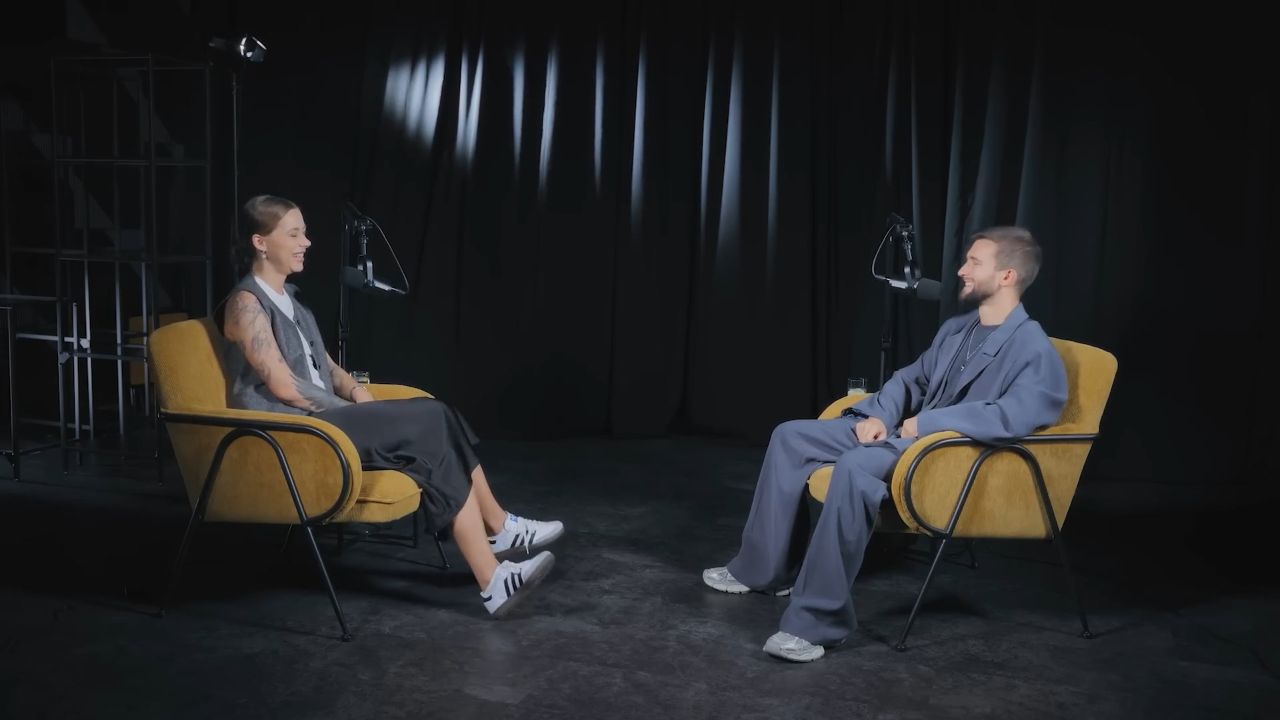
The formats vary. The most common is the talking head setup: one or more people on camera, usually seated, usually with a clean background or branded set behind them, speaking directly into microphones with the cameras rolling. This is the format you see on shows like The Diary of a CEO, Lex Fridman, or Impaulsive — a studio environment, good lighting, multiple camera angles, professional audio, and a visual experience that complements the conversation.
Beyond the straight talking head, video podcasts can incorporate B-roll footage (cutaway shots that illustrate what’s being discussed), on-location recording (shooting the conversation in an interesting physical environment rather than a studio), animated graphics and lower thirds (text overlays identifying speakers or highlighting key quotes), and screen sharing or visual aids when the content is instructional.
The video is then distributed on YouTube as a full episode, clipped into short-form content for TikTok, Instagram Reels, and YouTube Shorts, and sometimes embedded in show notes or on a dedicated website. The audio is stripped out and distributed through traditional podcast directories — Apple Podcasts, Spotify, Amazon Music — for listeners who prefer to consume the content that way.
This dual-format approach is what makes video podcasting so powerful from a content strategy perspective. You record once. You distribute everywhere.
What Is an Audio-Only Podcast?
An audio podcast is the traditional format: a recorded conversation, interview, or monologue distributed as an audio file through podcast directories and consumed through a podcast player app.
No video. No visual component. Just voice, sound design, and music.
Audio-only podcasts have genuine strengths that are easy to overlook when everyone seems to be talking about video. The intimacy of voice-only content is real and distinct. When there’s no visual layer to process, listeners tend to form a stronger parasocial connection with the host’s voice alone — it feels more personal, more like a private conversation, more like something happening inside their head rather than on a screen in front of them. This is part of why certain long-form audio podcasts — particularly in the storytelling, true crime, and personal finance spaces — have built extraordinarily loyal audiences without ever putting a camera in the room.
Audio is also significantly easier and faster to produce. There’s no lighting to set up, no camera angles to manage, no video editing timeline to work through. Record, edit the audio, export, upload. The workflow is leaner, the barrier to consistency is lower, and the skill set required is smaller.
For solo creators without a team, or for shows where the content is deeply conversational and doesn’t benefit from visual context, audio-only can still be the right call.
The Key Differences: A Honest Comparison
| Video Podcast | Audio Podcast | |
|---|---|---|
| Production effort | High — lighting, camera, video editing | Lower — audio recording and editing only |
| Equipment cost | Higher — camera, lights, plus audio gear | Lower — microphone and interface |
| Editing time | Significantly longer | Faster |
| Distribution reach | Audio directories + YouTube + social clips | Audio directories only |
| SEO value | High — YouTube is the second largest search engine | Lower — limited discoverability outside directories |
| Content repurposing | Excellent — clips, reels, shorts, thumbnails | Limited — audiograms, quote cards |
| Audience growth potential | Higher in 2026 — YouTube algorithm drives discovery | Relies more on word of mouth and directory ranking |
| Intimacy / connection | Good | Excellent |
| Barrier to entry | Higher | Lower |
| Ideal consumption context | Watching, seated, at a screen | Commuting, exercising, doing other things |
The table makes the tradeoff reasonably clear. Video podcasting asks more of you in terms of production time, equipment, and editing skill — but it gives you back significantly more in terms of reach, discoverability, and content output. Audio is simpler, faster, and more intimate — but it limits where and how people can find you.
When to Choose Video
You’re building a personal brand. If your face, your personality, and your presence are central to what you’re building — if you want people to know who you are, not just what you sound like — video accelerates that recognition faster than audio alone. People who watch you on YouTube feel like they know you. That familiarity translates directly into trust, and trust translates into sales, clients, and community.
You want to grow on YouTube. YouTube’s algorithm is one of the most powerful organic discovery engines available to independent creators. A well-titled, well-thumbnailed video podcast episode can surface to entirely new audiences through YouTube search and suggested videos in a way that Apple Podcasts and Spotify simply don’t replicate. If audience growth is your primary goal and you’re starting from zero, YouTube gives you the best organic leverage.
Your content is visual or demonstrative. Some topics benefit enormously from being seen. If you’re interviewing guests whose facial expressions and body language add to the conversation, if you’re discussing visual subjects like design or architecture or travel, or if you’re doing anything instructional where showing is more useful than telling — video serves your content better.
You want to generate short-form content consistently. The most efficient content creators in 2026 are recording long-form video podcast sessions and using the clips to fuel their entire social media presence. A single 60-minute video podcast episode can generate 8–12 short clips for TikTok, Instagram Reels, and YouTube Shorts — each one a standalone piece of content that drives new audiences back to the full episode. This flywheel effect is genuinely powerful, and it only works if you have video.You have access to a professional space to record in. Video rewards good production quality more visibly than audio does. A well-lit, well-designed studio environment communicates professionalism and authority at a glance. If you have access to a proper setup — whether you own it or you’re renting a professional studio — video becomes a much easier decision to justify.
When to Choose Audio
You’re working with a tight budget or limited time. Audio podcasting has a significantly lower cost of entry. A decent dynamic microphone, an audio interface, and a laptop will get you most of the way there. If budget is a genuine constraint and you need to be consistent without heavy investment, audio is the more sustainable starting point.
Your content is deeply conversational and doesn’t need visual context. Some conversations are better served by voice alone. Long-form philosophical discussions, intimate personal storytelling, confessional narrative formats — these genres have built their audiences on the strength of audio, and adding video to them doesn’t necessarily improve the experience. If your content lives in the listener’s imagination more than in front of their eyes, audio may actually be the superior format.
Your audience primarily consumes content passively. If you’re making a show for people who listen while commuting, running, cooking, or doing household tasks — people who physically cannot be watching a screen — then the visual component of a video podcast is irrelevant to them. Know how your audience consumes content before you decide what format to produce it in.
You’re testing a concept before committing to full production. If you’re not sure yet whether your podcast idea has legs, audio is a faster and cheaper way to find out. Start with audio, validate that the content resonates with an audience, and add video once you know the concept is worth the additional production investment.
Can You Do Both? Yes — And You Probably Should
The most practical approach for most creators in 2026 is to record video and distribute both. Film the session in a professional setup, publish the full video to YouTube, and strip the audio for distribution across podcast directories. Your audience gets to choose how they consume the content. You get the SEO and discoverability benefits of YouTube without abandoning listeners who prefer audio.
The only real challenge with this approach is production quality. If you’re going to put video on YouTube, the video needs to look good. A poorly lit, badly framed, low-resolution video podcast does more damage to your brand than no video at all — because it’s visible, and visible production quality shapes how people perceive your credibility before they’ve heard a single word you’ve said.
This is where the environment you record in becomes critical. Recording in a professional studio that’s set up for video podcasting — proper camera rigs, three-point lighting, acoustic treatment, clean backgrounds — means you walk in, sit down, and the technical side of looking and sounding professional is already handled. You can focus entirely on the conversation.
A home setup can work — people have built significant audiences recording in their bedrooms and spare rooms — but it requires meaningful investment in equipment and room treatment to get to a quality level that’s competitive with what a professional studio produces as standard. For most creators, particularly those based somewhere like Bali where the option of a professional studio is accessible and affordable, the math generally favours using the studio rather than building your own.
What the Best Shows Are Doing Right Now
The pattern across almost every major podcast that’s growing quickly in 2026 is consistent: record video in a professional environment, publish the full episode to YouTube with a strong title and thumbnail, clip the best 60–90 second moments for short-form social, and distribute the audio everywhere. The long-form YouTube video drives subscriptions and deep engagement. The short clips drive discovery and bring new audiences into the ecosystem. The audio-only distribution serves the existing loyal listeners who prefer that format.
This isn’t complicated. It just requires showing up to a proper recording environment consistently, having a clear enough conversation that the clips write themselves, and being willing to do the post-production work — or having a team that does it for you.
The creators who are winning aren’t doing anything magic. They’re just recording something genuinely useful or interesting, in a space that makes them look and sound credible, and distributing it as widely as possible. The format question — video or audio — matters less than the consistency and quality of what you’re actually saying.
But given the choice, in 2026, video gives you more surface area. More places to be found. More ways to be shared. More content from the same session.
Frequently Asked Questions
Yes — and it should be treated as a primary distribution channel, not an afterthought. Optimise your episode titles for YouTube search (think about what someone would type to find your content), create custom thumbnails for every episode rather than using auto-generated stills, write detailed descriptions with relevant keywords, and add chapters using timestamps to improve the viewing experience. YouTube rewards channels that take the platform seriously.
Significantly harder, particularly at the start. Audio editing for a 60-minute podcast might take 1–2 hours for a competent editor. Video editing for the same session — colour grading, cutting between camera angles, adding lower thirds and graphics, exporting in the right format — can take 4–6 hours or more. Tools like Descript have reduced this gap considerably by allowing you to edit video by editing the text transcript, but video editing still requires more time investment than audio editing. Factor this into your decision.
Absolutely, and many successful podcasters have done exactly this. The risk is that your existing audience associates your show with the audio format, and the transition to video can feel jarring if it’s not handled thoughtfully. It’s generally easier to start with video and offer audio as a secondary format than to retrofit a video layer onto an established audio show — but neither approach is wrong.
At minimum: a mirrorless camera or high-quality webcam (Logitech Brio or Sony ZV-E10), a proper microphone (Rode PodMic or Shure MV7), a key light (Elgato Key Light or similar), and a clean background. Budget approximately $500–800 USD for a functional home setup that produces acceptable results. A professional studio produces better results for a fraction of that as a per-session cost, which is why many creators in cities with accessible studios choose to rent rather than own.
Audio, without question. Viewers will tolerate slightly imperfect video if the audio is clear and present. They will not tolerate poor audio regardless of how good the video looks. Bad audio — echo, background noise, low volume, distortion — triggers an almost immediate subconscious response in listeners that signals low quality and low professionalism. If you have to prioritise one investment, prioritise the microphone and the acoustic environment before you worry about the camera.
Conclusion
Video podcasting has a clear edge in 2026 for creators who want to grow their audience, maximise their content output, and build a recognisable personal brand. The discoverability advantages of YouTube, the repurposing potential of video clips, and the visual credibility of a well-produced studio setup make it the stronger strategic choice for most new podcasters.
Audio-only podcasting remains a legitimate and powerful format — particularly for intimate, narrative-driven shows with established audiences who came for the voice and the story, not the visuals. It’s also the more accessible entry point if budget or production capacity is a genuine constraint.
For most creators starting from scratch in 2026, the smartest approach is to record video in a professional environment and distribute both formats simultaneously. You get the reach of YouTube and the accessibility of audio directories from a single recording session, without doubling your production work.
The format you choose matters. But what matters more is that you show up consistently, say something worth listening to, and give it enough time to find its audience.
Record Your Video Podcast in Canggu
At Hypehunters, our studio in Canggu is built for exactly this — video podcast recording that produces broadcast-quality results without the overhead of building and maintaining your own setup.
We have professional camera rigs, three-point lighting, treated acoustics, broadcast-quality microphones, and a dedicated high-speed internet connection. Whether you’re recording a solo episode, a guest interview, or a co-hosted show, you walk in prepared to talk and walk out with footage that looks and sounds like it was made in a proper studio — because it was.
Book a session or arrange a studio tour at hypehunters.net →
Location: Jl. Imam Bonjol Square, Blk. A.55-56, Bali 80119
Phone: +62 819-9976-7677
Email: hypehunters.production@gmail.com
