 Skip to content
There is a moment that most business owners experience at some point in their digital marketing journey — a moment where they realize that the content they’ve been producing, the polished blog posts and carefully edited Instagram photos and scheduled social media updates, feels somehow distant from the people they’re trying to reach. Managed. Curated. Safe. And precisely because it’s safe, it’s not moving the needle the way they hoped it would.
Live streaming fixes that problem.
There is something about a live broadcast that cuts through the noise in a way that pre-recorded content simply cannot replicate. Your audience knows you can’t go back and edit this. They know what they’re seeing is real, unfiltered, and happening right now. That immediacy creates a quality of attention and trust that takes months to build through static content but can be established in a single well-executed live session.
Businesses that have understood this early — coaches running live Q&As, brands doing product reveals, e-commerce sellers using TikTok Live, educators delivering real-time workshops — have built audiences and revenue streams that their competitors are still trying to figure out. And the gap between early adopters and everyone else is only widening.
If you’re based in Bali, running an online business, or trying to reach a global audience from Southeast Asia, this guide will walk you through everything you need to know about live streaming for business — what it can do for you, what you actually need to do it properly, where you should be streaming, and why production quality is the variable that separates the businesses that build real momentum from the ones that go live twice and then quietly give up.
Contents
- Why Live Streaming Has Become Essential for Business
- What Live Streaming Can Do for Your Business
- The Problem with Streaming from Home in Bali
- What You Actually Need for a Professional Live Stream
- Where Should You Stream? A Platform Guide
- How a Professional Studio Solves Everything
- Building a Live Streaming Strategy That Sticks
- Frequently Asked Questions
- Conclusion
- Stream Live from Canggu with Hypehunters
Why Live Streaming Has Become Essential for Business
The numbers tell part of the story. Global live streaming revenue surpassed $180 billion in 2023 and continues to grow at a compound annual rate that outpaces virtually every other digital content category. TikTok Live has become one of the primary drivers of direct e-commerce in Southeast Asia, with brands reporting conversion rates from live selling that exceed their static social media content by factors of three to five times. YouTube Live sessions consistently outperform pre-recorded videos in terms of initial reach and comment engagement. LinkedIn Live has quietly become one of the most effective tools for B2B lead generation available to independent consultants and small agencies.
But the numbers only explain the scale of the opportunity. The reason live streaming works — the psychological and relational reason — is simpler than any statistic.
Live streaming compresses the trust timeline.
In a traditional content marketing strategy, trust is built slowly. Someone discovers your brand, reads your content over several weeks or months, gradually develops a sense of who you are and what you stand for, and eventually decides they like you enough to buy from you or work with you. That process is real and it works — but it’s slow.
A live stream collapses that timeline because it reveals you in real time. When your audience watches you handle an unexpected technical glitch with good humour, answer a difficult question honestly without a script to fall back on, or demonstrate genuine expertise in response to something you couldn’t have prepared for — they learn more about you in 45 minutes than they would from six months of polished blog posts. The vulnerability inherent in live content is, paradoxically, its greatest commercial asset.
This is especially true for service-based businesses — coaches, consultants, educators, agencies, therapists, fitness professionals — where the relationship between the provider and the client is central to the purchase decision. People need to feel like they know you before they hire you. Live streaming lets them feel that faster.
What Live Streaming Can Do for Your Business
The use cases for business live streaming are broader than most people initially consider. Beyond the obvious — going live on Instagram or Facebook — there are several distinct formats worth understanding, each suited to a different business objective.
Live Q&As and Office Hours. You announce a topic, open the floor, and answer questions from your audience in real time. This is one of the simplest and most effective formats for establishing expertise and building community. It signals confidence — you’re willing to be tested publicly — and it generates genuine value for your audience without requiring a prepared script.
Product Launches and Reveals. Live streaming a product launch creates urgency and excitement in a way that a pre-recorded announcement video never does. The comments section becomes a real-time reaction feed. Early adopters can ask questions and get answers before they’ve even completed their purchase. The live element transforms a product launch from a broadcast into an event.
Live Selling (TikTok Live and Instagram Live Shopping). This format has exploded in Southeast Asia, where live commerce has become a primary shopping channel for a significant portion of the consumer market. Brands go live, showcase products, answer questions from viewers, and drive purchases in real time — often with exclusive live-only discounts or bundles that create urgency. The conversion dynamics of live selling are genuinely different from static e-commerce, and businesses that have mastered the format are generating revenues that their pre-live operations couldn’t approach.
Webinars and Live Workshops. A live webinar — a structured educational session with slides, a presenter, and a live audience — is one of the most reliable lead generation formats available for online businesses. Attendees pre-register, which means you’re capturing contact details before the event. The live format creates accountability for attendance in a way that pre-recorded content doesn’t. And the Q&A section at the end is where webinars convert — people who’ve been on the fence for an hour of valuable content, asked their specific question, and received a direct answer are remarkably close to buying.
Virtual Events and Panel Discussions. Bringing together multiple speakers or panellists in a live format creates an event-like atmosphere that a single presenter can’t replicate. The dynamic between panellists, the interplay of different perspectives, and the unpredictability of a live multi-person discussion make these sessions among the most engaging formats in the live streaming toolkit.
Behind-the-Scenes and Day-in-the-Life Content. Some of the most effective live streams for personal brands and lifestyle businesses are simply unstructured windows into how you work, where you work, or what your day looks like. This format works particularly well for creators, designers, artists, and anyone whose process is genuinely interesting — and for businesses based in a place as visually compelling as Bali, the setting itself becomes part of the content.
The Problem with Streaming from Home in Bali
If you’ve ever tried to go live from a Balinese villa or apartment, you already know some of what’s coming. If you haven’t, this section may save you from an embarrassing first broadcast.
Internet reliability is the first and most critical issue. Bali’s internet infrastructure has improved enormously over the last five years — fibre connections are now available across much of Canggu, Seminyak, and Ubud — but quality varies significantly between providers, buildings, and even time of day. Shared connections in villas are particularly unreliable during peak hours. And live streaming is unforgiving of internet instability in a way that other online activities are not. A dropped connection mid-broadcast doesn’t just interrupt the stream — it interrupts the experience for everyone watching, breaks the momentum of the session, and in a selling context, can cost you actual conversions that were in progress.
For a stable live stream at 1080p, you need a minimum of 10 Mbps dedicated upload bandwidth — not total bandwidth, not shared bandwidth, but bandwidth that is reliably available to your stream throughout the entire session. For 4K streaming, that number doubles. Most home connections in Bali can meet this requirement some of the time. Meeting it consistently, on demand, without technical intervention, is a different matter.
Acoustic and noise issues are the second major challenge. Bali is a sonically rich environment, which is one of the things that makes it wonderful to live in. It is not, however, a quality characteristic for a live broadcast. The ambient noise of a residential area in Canggu — motorbikes on the street, a ceremony in the neighbourhood, construction beginning at 8am, tropical rain arriving without warning, a rooster with an opinion — will find its way into your stream in ways you won’t fully appreciate until you watch the recording back.
Unlike a podcast or a pre-recorded video where background noise can be minimised in post-production, a live stream has no post-production. What your microphone picks up is what your audience hears, in real time, with no opportunity to fix it before it reaches them.
Lighting is the third variable that home streamers consistently underestimate. The tropical light in Bali is extraordinary — harsh and direct during the day, golden and beautiful at golden hour, gone entirely by 7pm. None of these qualities translate well to a live broadcast without deliberate lighting design. Streaming during the day with a window behind you will blow out your background and leave your face in shadow. Streaming in a room without proper supplemental lighting in the evening will make you look dim, flat, and uninspiring on camera. Neither impression is the one you want to make on a prospective client watching your webinar for the first time.
The perception problem is the fourth issue, and arguably the most important one for businesses. Poor production quality doesn’t just make your stream look bad. It makes you look bad. Before you’ve said a single word, your audience has formed an impression based on what they can see and hear — and that impression, positive or negative, colours everything that follows.
A viewer who joins your live webinar and sees a well-lit presenter in a clean, professional environment with clear audio is primed to take you seriously before you’ve made your first point. A viewer who joins and sees an echo-y room, a camera pointing up at the ceiling, a presenter squinting against the light from a window, and hears the distant sound of a motorbike outside — that viewer has already discounted your credibility, consciously or otherwise. They’re fighting an impression you gave them in the first ten seconds.
For businesses where the product is expertise, authority, or professional capability, this matters enormously. Your live stream is not separate from your brand. It is your brand, in real time, in front of a live audience.
What You Actually Need for a Professional Live Stream
Let’s get specific. A professional live stream requires competence across five technical areas: camera, audio, lighting, internet, and software. Getting all five right simultaneously is what separates a broadcast that looks and sounds professional from one that looks like a video call.
Camera. The minimum viable camera for a professional live stream in 2026 is something capable of clean 1080p output at 30 frames per second with good low-light performance. A dedicated mirrorless camera — Sony ZV-E10, Sony A6400, or Canon M50 Mark II are all excellent options in the entry-to-mid range — connected via HDMI to a capture card (Elgato Cam Link 4K is the standard) gives you significantly better image quality than any webcam, including the Logitech Brio which, while excellent for its category, still can’t match a proper camera with a dedicated lens. Lens choice matters too — a 50mm f/1.8 or 35mm f/1.8 prime lens produces a shallow depth of field that separates you from your background and creates the cinematic look associated with high-production video.
Eye-level framing is non-negotiable. A camera positioned below eye level — which is where a laptop camera almost always sits — creates a perspective that is psychologically unflattering in ways that your audience registers subconsciously. Eye level or very slightly above is the correct position. Frame yourself with your eyes in the upper third of the frame, with visible space from your shoulders upward, and a clean or intentional background behind you.
Audio. As established in the previous article in this series, audio quality matters more than video quality. Your audience will tolerate imperfect visuals. They will not tolerate bad audio.
For live streaming specifically, you want a microphone that rejects ambient noise effectively — a dynamic microphone like the Shure SM7B, Rode PodMic, or Shure MV7 is generally preferable to a condenser in untreated or semi-treated spaces because dynamic mics are less sensitive to off-axis sounds and room reflections. Connect it through a proper audio interface (Focusrite Scarlett Solo or 2i2) rather than directly via USB to ensure clean signal gain without noise floor issues.
Position the microphone correctly — closer is better for voice isolation, typically 6–8 inches from your mouth for a cardioid dynamic mic — and monitor your audio levels through headphones before going live. A level that’s too low is almost as damaging as a level that’s too high; aim for peaks around -12dB to -6dB on your streaming software’s input meter.
Lighting. Three-point lighting is the standard for a reason. A key light (your primary source, positioned 45 degrees to one side of your face at approximately eye level or slightly above), a fill light (on the opposite side, at lower intensity, to reduce harsh shadows created by the key light), and a backlight or rim light (positioned behind you and aimed at the back of your head and shoulders, to create separation between you and the background) produces a result that looks natural, professional, and visually dimensional on camera.
Colour temperature consistency matters. All your lights should match — typically 5500–6000K for a clean, daylight-balanced look, or 3200–3500K for a warmer, more intimate look. Mixing colour temperatures (a warm lamp on one side, a cool LED panel on the other) produces an unflattering result that’s difficult to correct without proper colour grading tools.
Internet. For a reliable live stream, you need a wired connection — ethernet directly from your router to your streaming computer, not WiFi. Even a strong WiFi signal introduces packet loss and latency variability that can destabilise a stream in ways that a wired connection prevents. If your streaming setup can’t accommodate a wired connection, a dedicated 4G or 5G mobile connection as a backup is strongly advisable.
Bandwidth requirements: 1080p at 30fps requires approximately 4–6 Mbps upload. 1080p at 60fps requires 6–8 Mbps. 4K at 30fps requires 15–25 Mbps. Always test your upload speed from your streaming location — not your download speed, which is irrelevant — before committing to a broadcast.
Software. OBS Studio is the free, open-source industry standard for live streaming software and is capable of everything from basic single-camera streams to complex multi-source productions with overlays, transitions, and multiple simultaneous stream destinations. It has a significant learning curve but is worth investing time in if you’re serious about streaming regularly. Streamyard is a browser-based alternative that is substantially easier to use and supports multi-guest streams with branded overlays — it’s the tool most webinar hosts gravitate toward because the guest experience (joining via a link in a browser, no software installation required) is frictionless. Ecamm Live (Mac only) is the most polished option for solo presenters who want production-quality output without OBS’s technical complexity.
Where Should You Stream? A Platform Guide
Different platforms serve different audiences and different business objectives. Understanding the strengths of each helps you allocate your live streaming effort where it will generate the most return.
YouTube Live is the strongest platform for long-term content value and SEO. A live stream on YouTube becomes a permanent, searchable, indexable video after the broadcast ends — which means it continues working for you indefinitely. YouTube’s algorithm distributes live content to relevant audiences, and the platform’s search functionality means your stream can be discovered by people who weren’t following you before it aired. If you’re building an audience from scratch and you’re playing a long game, YouTube is the platform to prioritise. The trade-off is that YouTube live audiences are harder to build initially — you need an existing subscriber base or significant SEO traction to get organic viewers into a live session.
TikTok Live is the highest-opportunity platform for reach and e-commerce in Southeast Asia right now. TikTok’s algorithm is uniquely democratic — it surfaces content to relevant audiences regardless of follower count, which means a well-executed TikTok Live can reach thousands of new viewers even on an account with a few hundred followers. For product-based businesses, TikTok Live’s in-stream shopping features — product links that viewers can tap to purchase without leaving the app — have made it the primary live commerce channel for a significant portion of the Asian consumer market. The content expectations on TikTok Live are more casual and energetic than other platforms, which actually lowers the production bar somewhat — authenticity and personality matter more than polish.
Instagram Live remains valuable for reaching existing followers and creating a sense of community and immediacy around your brand, but its algorithmic distribution has become less generous over time — you’re largely broadcasting to people who already follow you rather than reaching new audiences. It’s best used for nurturing an existing community rather than growing one. The integration with Instagram Stories (live replays appear as Stories for 24 hours) extends the shelf life of content slightly, but Instagram Live’s discoverability for new audiences is limited.
LinkedIn Live is the most underutilised platform on this list, particularly for B2B businesses, consultants, and professional service providers. The audience on LinkedIn is there specifically in a professional mindset — they’re thinking about business, looking for solutions to professional problems, and receptive to content that positions you as an expert. A well-promoted LinkedIn Live — a panel discussion, a thought leadership Q&A, an industry-specific workshop — can generate high-quality leads from exactly the right audience. The platform has stricter requirements for Live access (you need to apply and meet minimum follower thresholds), but the quality of attention from the audience that does show up is consistently higher than on consumer social platforms.
Dedicated Webinar Platforms — Zoom Webinars, Demio, Hopin, Riverside.fm — are the right choice when your live stream is a structured commercial event: a product demonstration, a live training, a sales webinar with a pitch at the end. These platforms provide registration pages (so you’re capturing email addresses before the event), email reminder sequences, attendee analytics, and features designed specifically for the webinar format like polls, hand-raising, and breakout rooms. The trade-off is that you’re not getting organic discovery — you’re hosting a closed event for a pre-registered audience — but for businesses where the live stream’s purpose is conversion rather than awareness, the infrastructure these platforms provide is worth it.
Multi-Platform Streaming — broadcasting simultaneously to YouTube, Facebook, LinkedIn, and TikTok from a single source — is possible through tools like Restream, StreamYard, or OBS with the appropriate plugins. This approach maximises reach but also maximises complexity. Start with one or two platforms and add more once your production workflow is stable.
How a Professional Studio Solves Everything
The challenge with building a high-quality home streaming setup isn’t any single component — it’s the combination of all of them simultaneously. You can solve the internet problem, and then deal with the lighting problem, and then address the audio problem, and by the time you’ve solved all three you’ve spent considerable time and money and you still have to manage the technical complexity of running everything yourself during a live broadcast where problems cannot be edited out after the fact.
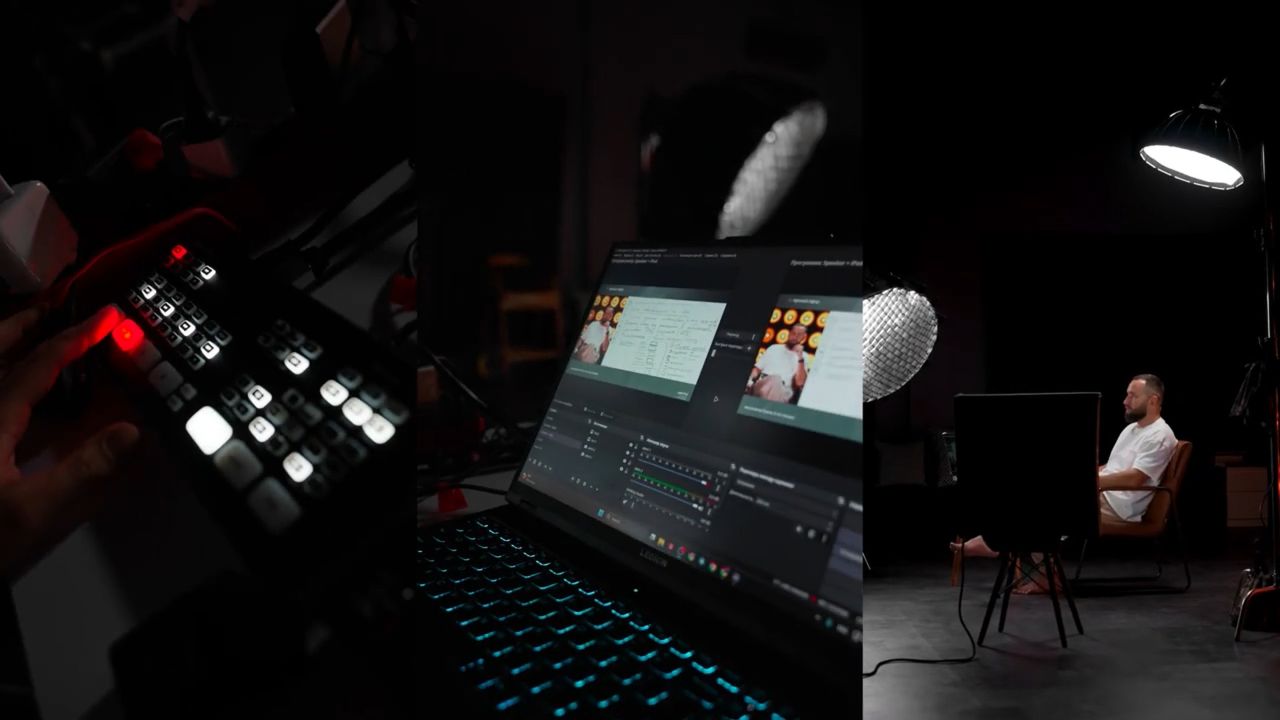
A professional live streaming studio eliminates these variables entirely. When you walk into a properly equipped studio, the camera is set up and calibrated. The three-point lighting is in place. The microphone is positioned correctly, the levels are checked, the acoustic treatment means there’s no echo and no room noise. The internet connection is a dedicated fibre line with a backup — not shared bandwidth, not WiFi, but a connection that exists specifically to support professional broadcast output. And if something does go wrong, there’s a technically competent person in the room who can fix it before your audience notices.
What this means in practice is that you arrive at a studio session prepared to perform — to be present, focused, and engaging for your audience — rather than spending the first 20 minutes of your pre-show checklist troubleshooting why the audio interface isn’t being recognised or why the lighting is creating a strange shadow across half your face.
The mental load difference between running a live stream from a home setup and running one from a professional studio is significant, and it shows in the quality of the content. Presenters who are relaxed and technically confident perform better on camera. Their energy is higher. Their answers are sharper. Their presence is more compelling. The audience feels it, even if they can’t articulate exactly why.
For businesses in Bali — particularly those based in Canggu where access to a professional studio is genuinely convenient — the calculus generally favours using a studio over building and managing a home setup, particularly in the earlier stages of a live streaming strategy when the priority is getting consistent, high-quality content out rather than owning infrastructure.
Building a Live Streaming Strategy That Sticks
The businesses that get the most value from live streaming aren’t necessarily the ones with the most polished production or the biggest audiences. They’re the ones that show up consistently, understand what their specific audience comes to live content for, and have thought clearly about how live streaming fits into the broader arc of their business.
A few principles that separate sustainable live streaming strategies from the ones that run hot for a month and then quietly disappear:
Pick one platform and commit to it first. The temptation to be everywhere simultaneously is real but counterproductive at the start. Each platform has its own culture, its own algorithm, its own content expectations, and its own community mechanics. Getting genuinely good at one platform — understanding what performs, building a regular audience, developing your on-camera presence in that specific context — is more valuable than being mediocre on six platforms at once. Once you’ve established a rhythm on one platform and you have a replicable production workflow, adding a second destination becomes much easier.
Treat your live stream schedule like a TV show. The businesses that build the most loyal live audiences are the ones that broadcast regularly, at predictable times, on predictable topics. “Every Tuesday at 10am, we go live for 45 minutes to answer your questions about X” creates a habit for your audience. They know when to show up. They plan around it. They tell other people. Irregular, unpredictable live streams — going live when inspiration strikes, or when you have something to announce — build audiences much more slowly.
Promote before, engage during, repurpose after. A live stream without promotion is a live stream for an empty room. Start promoting at least 48 hours before you go live — on your social channels, in your email list, in any communities where your audience is present. During the stream, actively acknowledge people joining by name, respond to comments, and create moments that reward people for being there live rather than watching the replay. After the stream, repurpose the content — edit the full session for YouTube if it isn’t already there, pull the best clips for social, transcribe key sections for a blog post or newsletter.
Measure the right things. Viewer count during a live stream is a vanity metric if your goal is business outcomes rather than brand awareness. The metrics that matter are comment quality (are people engaging meaningfully, or just lurking?), conversion events (click-throughs, purchases, sign-ups that happen during or immediately after the stream), replay views (how many people watched the recording after the live session ended?), and audience retention (at what point in the broadcast do people drop off, and why?). These numbers tell you far more about the health of your live strategy than peak concurrent viewership.
Frequently Asked Questions
No. Live streaming is one of the formats that can work with a small but engaged audience — even 20 or 30 live viewers who are genuinely interested in what you do is a valuable session if those viewers are qualified potential clients or community members. The conversion dynamics of live content are different from broadcast media. A small, attentive, engaged audience converts at a higher rate than a large, passive one. Focus on the quality of the audience you’re building rather than the size.
This depends on your primary audience’s location. For audiences in Australia and Southeast Asia, mid-morning Bali time (8–10am WITA) works well. For audiences in Europe, late afternoon Bali time (4–6pm WITA) corresponds to early morning in Central European Time — workable for morning commuters. For US audiences, you’re working with a difficult time zone gap regardless — afternoon Bali time reaches US West Coast audiences in the late evening, and East Coast audiences in the early hours of the morning. If your primary market is the US, consider whether asynchronous content (live recordings distributed as video) might serve that audience better than scheduling live sessions around their daytime hours.
Prevention is the strategy. Test everything — camera, audio levels, lighting, internet connection, streaming software settings — at least 30 minutes before you go live, not immediately before. Have a mobile hotspot available as an internet backup. Know where the mute button is and use it if unexpected noise arrives. If a significant technical failure occurs during a live session, acknowledge it directly and honestly — your audience will respect transparency far more than a presenter who pretends nothing is wrong while clearly struggling with equipment — and either resolve it quickly or end the session and reschedule.
For structured webinars or presentations where you have a script, a teleprompter can help maintain flow and ensure you hit all your key points. For conversational formats — Q&As, interviews, panel discussions — a teleprompter is counterproductive because it makes you look like you’re reading rather than talking to your audience. The best live presenters work from bullet points rather than full scripts, giving them the structure to stay on track and the flexibility to respond naturally to what’s happening in the room or in the comments.
Yes, through several mechanisms depending on the platform. TikTok Live has virtual gifts that viewers can purchase and send to creators, which can be converted to cash. YouTube Live has Super Chats and Super Stickers — paid highlighted comments during live streams. Platform-agnostic monetisation comes through selling products or services directly during the stream, driving traffic to a sales page, promoting a webinar registration, or using the live content as a lead generation mechanism for a high-ticket offer. The most reliable monetisation for business live streaming is indirect — using the live format to build trust, demonstrate expertise, and convert viewers into clients rather than relying on platform-native monetisation features.
Conclusion
Live streaming is not a trend that’s going to plateau and recede. The underlying reasons it works — the trust it builds, the urgency it creates, the intimacy it establishes between a business and its audience — are not going away. If anything, as audiences become more sophisticated consumers of content and more resistant to polished, managed brand communications, the unedited authenticity of live content becomes more valuable, not less.
For businesses based in Bali, the opportunity is real and the infrastructure to take advantage of it is here. The tools exist, the platforms are hungry for quality live content, and the audiences are there. What separates the businesses that build momentum from live streaming from the ones that try it briefly and move on is usually not talent, not content quality, and not even audience size — it’s production quality and consistency.
Show up regularly. Look and sound professional. Give your audience something genuinely worth watching. And do it in an environment that lets you focus entirely on the content rather than the technical logistics of getting it on screen.
Stream Live from Canggu with Hypehunters
At Hypehunters, our live streaming and TikTok studio in Canggu is built for business owners, creators, and brands who are serious about what they put on screen.
We provide a dedicated fibre internet connection, professional camera rigs, broadcast-quality audio, three-point lighting, and technical support on the day — so you can focus entirely on your audience and your content. Whether you’re running a webinar for 500 registrants, going live on TikTok to sell a product, or hosting a panel discussion for your LinkedIn audience, we have the setup to make it look and sound exactly the way it should.
Book a session or arrange a studio tour at hypehunters.net →
Location: Jl. Imam Bonjol Square, Blk. A.55-56, Bali 80119
Phone: +62 819-9976-7677
Email: hypehunters.production@gmail.com
